Şehit Hasan Acar Secondary School activities
Our logo

Our poster

Our puzzles
We are playing games at school.


Our Bulletin Boards


Basic datas of our capital city -Ankara
Ankara is the capital city of Turkey and the second
largest city in the country after Istanbul. It is located at the
heart of both Turkey and Central Anatolia. The
population is around 4.5 million.
Ankara is the administrative center of Turkey and a huge
university town, so it has a large population of government workers and
university students. As the national capital, Ankara is home to a large
population of foreign diplomats and embassy staff, so it offers goods and
services that might be more difficult to find in other Turkish cities.
Ankara is a sprawling, modern city which can appear as little
more than a dull, concrete jungle at first glance. As a result, many tourists
tend to use it merely as a transit point for getting to places like Konya or
Cappodocia. However Ankara does have a lot to offer for those prepared to look
a bit deeper.
Ankara has a symbolic significance for the secular Turks. It is
the place where a new era for the Turkish people started. It is a symbol for
independence, development and Western values.
History
Ankara was a small town of few thousand
people, mostly living around Ankara Castle, in the beginning of the 20th
century. The fate of the city has changed, when Mustafa Kemal Atatürk and his
friends made Ankara the center of their resistance movement against the Allies
in 1920, and established a parliament representing the people of Turkey,
against the Allies’ controlled Ottoman Government in the occupied Istanbul of
post World War I. Upon the success of the Turkish War of Independence, the
government in Istanbul and the empire is abolished by the Grand National
Assembly of Turkey in Ankara in 1923, and the Republic of Turkey is
established. When you look at the modern Ankara of 5 million people today,
almost all you see is built afterwards.
This doesn't mean that Ankara does not
have history. Located in the center of Anatolia, Ankara’s history goes back to
second millennium BC. Footsteps of Hittites, Phrygians, Lydians, Persians,
Greeks, Galatians, Romans, Byzantines and the Turks are still present.
The name Ankara is originated from the
Celtic word of Ancyra, meaning Anchor. The original reason of the use of the
name anchor in an inland city is not certainly known, but there are several
different myths. King Midas, whose touch has turned everything into gold in the
mythology, is buried in the ancient site of Gordion, in suburban Ankara.
If you are traveling through Ankara’s
Esenboga Airport, look to the wide fields around. This is where Timur the Lane
defeated Ottoman sultan Bayezid I in 1402, on the great Battle of Ankara. The
district of Esenboga keeps its name since then, as one of Timur’s famous
generals and the commander of his famous elephant fleet “Isin Boga” has set his
base here.
Ankara is recaptured by the Ottomans in
1403, and remained under Turkish control since then.
Features
Apart from the old town in and around the citadel near Ulus and
unplanned shantytown neighbourhoods inhabited by people from rural areas in the
last five decades, most of Ankara, which was a provincial town of 20,000 people
in the early days of the Republic, is a purpose-built capital due to its
strategic location at the heart of the country. The history of settlement in
the area is millenia old.
The biggest claim to fame of the town used to be the long-haired
local breed of goats named after former name of the city (Angora), out
of which high quality mohair textiles were produced, today the only place where
you can spot them in city is the lawns on the side of a clover-leaf interchange
on the highway west—in the form of cute sculptures.
Ankara being a young and modern city makes her face an identity
problem. The increase of population from couple thousand to several million in
less than a century means that almost everyone came here from somewhere else.
Finding a native "Ankarali" is challenging, as a result. The
population and culture of Ankara, therefore, is a mixture of everything Turkey
offers, with people of origins from all cities of Turkey.
Ankara is quite a large city, with different towns and
neighborhoods of their own characters. In a very simplified manner, most
attractions of the city run through the long Ataturk Boulevard, running and
diving the city north to south. Starting from Ulus Square, going towards south
in Ataturk Boulevard, you will reach Kizilay, Kavaklidere and then Çankaya. As
you pass through these districts one by one, the standards visibly increase.
Ulus is the historic center of Ankara, with most museums, early
republican buildings, and the ancient Ankara Castle. Being the most elegant
center of the republic in the beginning of the 20th century, now the area has
left its charm, and is a messy, crowded neighborhood. Unless you are looking
for the real cheap, (rather than some specific selections) not recommended for
dining, accommodations or nightlife. In case you are interested to get a
feeling of how life was once in Ankara, find Hamamonu District, the newly
restored neighborhood with old Ankara houses. A famous spot for the
conservative Ankarans, walk through the narrow traditional streets, and sip
your Turkish coffee in an historic wooden house, especially at the night. Do
not expect to find alcohol at Hamamonu.
Next, Kizilay is the working class center of Ankara. The famous
Kizilay Square, named after the now-demolished "Red Crescent"
headquarters building, is Ankara's political center. Throughout the decades,
lot's of protests and rallies has taken place in the square, and even today,
this is the center of the political protests. Many roads and streets around
Kizilay are better discovered on foot, and there are lot's of budget
restaurants, cafes, bars, and clubs of different taste. Sakarya Caddesi
(Sakarya Road) is a messy pedestrian area with fisheries, street sellers and
restaurants. Pass over the southern side of Ziya Gokalp Caddesi, the parallel
vehicle road, and you will reach the district around Yuksel Caddesi (Yuksel
Road). This pedestrian neighborhood is a left oriented area, with several
culture centers, cafes, pubs, restaurants and bookstores. Many locals looking
for quality avoids Ulus and Kizilay.
Continuing southern, the area after Kizilay and up to Kugulu
Part (Swan Park) is Kavaklidere, also simply known Tunali district (Tunali
Hilmi Caddesi/Road runs parallel to Ataturk Blvd, and locals simply name it and
around as Tunali.) The area is more cosmopolitan, open minded, and popular
among the young. The back streets are full of cafes, restaurants, pubs to rock
venues.
Walking up from Kugulu Park (Swan Park), pass to Arjantin Street
and in the end, turn left to Filistin Street. These two are where the top end
cafes and restaurants are found, full of Ankara's chick and elegant going there
to see and be seen. Further south, you reach Atakule Tower at Çankaya, the
diplomatic center of Ankara, with the Presidential Palace and most embassies.
From Kugulu Park to up, Ankara's nicest parks are aligned, namely Segmenler
Park and Botanical Garden, in addition to small but cure Kugulu Park.
Rather than this alignment on Ataturk Blvd., check Bahçelievler
District, west of Kizilay. 7th Road (7.Cadde) and around is a student oriented
and family friendly region with shops, cafes and restaurants.
Further west, through Eskisehir Road, you will pass through the
once suburban neighborhoods of Bilkent, Umitkoy and Cayyolu, which are new
modern towns, less of an interest to tourists, but offers good dining and
nightlife. Visit Park Caddesi, the areas newly created nightlife center.
Climate
As any other part of the Anatolian highland, Ankara has
continental climate. The winters are cold and usually snowy. Temperature is
commonly below the freezing point during this season, but it rarely drops below
-15°C at nights. Thanks to
the low levels of relative humidity, the hot and dry summers are more
comfortable than coastal regions of Turkey. Average daily temperatures in
midsummer are around 30°C. Daily temperatures can reach 35°C and above, but is
not common and usually last no more than a few days. Summer nights are cool, though,
so be sure to bring at least a cardigan with you to wear outdoors. Spring and
autumn are the wettest seasons, but with an annual rainfall amount of 415 mm
(i.e., a semi-arid climate), you are unlikely to get much wet during your trip
to Ankara, anyway.
New Years Cards


Knowing better to each other
https://docs.google.com/presentation/d/1FP- /edit?usp=sharing
Traditional clothes of Ankara, Turkey

Turkish Lullabies
Weddings in Turkey


Weddings today in the cities and more modern circles are much more like western style weddings, with a wedding banquet or reception uniting family and friends of the couple. Also, all marriages require a civil ceremony conducted and recorded by a municipal officer to become legally effective. In many cases, the religious ceremony precedes the civil ceremony by a few days.
In the traditional setting, wedding ceremonies generally start on Tuesday and end on Thursday, or start on Friday and end on Sunday. Wedding expenses are met by the bridegroom’s family. Regional variances aside, traditional weddings are marked by the following passages: Planting of a wedding flag, an entertaining gathering for the women of the couple’s families on the night before the wedding day, characterized by the coloring of parts of the hands and feet with Henna (Kına Gecesi), fetching the bride, and the bride’s veil.
Before the wedding, as is done in the course of the engagement ceremony, formal invitations are distributed and family, friends and neighbors are invited to the wedding. While the bride’s family tries to complete preparations for the trousseau, the bridegroom’s family tries to complete gifts for the bride to be presented to her before, during and after the wedding.
A wedding flag is planted by men coming from the noon prayer and friends of bridegroom at the bridegroom’s home. In some regions, apples, onions, mirrors, etc. are placed on top of the flag. Thus the wedding is officially underway.
A wedding flag is planted by men coming from the noon prayer and friends of bridegroom at the bridegroom’s home. In some regions, apples, onions, mirrors, etc. are placed on top of the flag. Thus the wedding is officially underway.
Kına Gecesi:
A traditional version and perhaps precursor of the bachelorette party, the night before the wedding is set aside for the bride to spent her last night at her family’s home in the company of women of all ages who are close to the couple’s family. This ceremony get its name “Kına Gecesi” - Henna Night – from the fact that the usually the hands of the bride is adorned with Henna. The bridegroom’s female relatives too attend this event and are hosted in the bride’s home.
Usually dry henna brought by the bridegroom’s family is broken to pieces in a silver or cupper vessel by a woman whose father and mother is still alive, and not experienced otherwise separation. After preparing the bride, a veil ornamented with red flake is placed over her head, and she is brought amidst the guests accompanied by songs and hymns about henna. Hands and feet of the bride are dyed with henna. The bridegroom’s side is under the obligation to put money in the hand of the bride. Dying ceremony of henna is different according to regions. The henna so dyed has such names and types as “iplik kınası” (henna for yarn), “sıvama” (smearing), “kuşgözü” (bird eye). This ceremony, which itself can be a sad occasion, where relatives of the bride, particularly her mother lament the departure of the daughter from her parent’s home, is followed by joyous celebration, song and dance. After the guests leave, it is not unusual for the closest friends of the bride to remain with her until the next morning, spending their last “single” hours together.
Safer Internet Day in Our School in Turkey

Our bulletin board for E- safety day.

We watched a powerpoint slide and talked about safer Internet usage.

Our school has been awarded with a bronze label this year.
Albanian Dance performed by our students
https://youtu.be/TF7FWm-IizsTraditional Celebrations in Turkey
Hidrellez Traditions
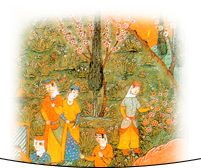 Hıdrellez, is one of the seasonal festivals of all Turkish world. Hıdrellez Day, which is known as Ruz-ı Hızır (day of Hızır), is celebrated as the day on which Prophets Hızır and Ilyas met with each other on the earth. The words Hızır and İlyas have since fused together pronounced as Hıdrellez. Hıdrellez Day falls on May 6 in the Gregorian calendar and April 23 in the Julian calendar, also known as the “Rumi” calendar.
In this day, people put the things or their pictures which they want to be on the boughes of the roses. 
People cook meals with rice or "bulgur" it is a kind of legumes. They think that with this tradition, it will bring them luck and abudance.
They pray on this night and some teenagers make a fire and jump on this, but this is dangerous of course.

Nevruz Celebrations in Turkey and in Central Asia
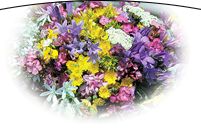 The day accepted as the New Year’s Day by the Turks living in Central Asia, Anatolian Turks and Iranians is called Nevruz. It is a combination of the Persian words Nev (New) and Ruz (Day). It corresponds to March 22nd according to the Western calendar and March 9th according to the Moslem one, when the day and the night are of equal length and ıs known by such names as "Nevruz-i Sultani,” "Sultan Nevruz," "Sultan Navriz" and "Mart Dokuzu" (Ninth of March).
Although it is has been claimed that Nevruz was a Persian conception, it also appears in the Twelve Animal Turkish Calendars, and had been known to the Turks and celebrated by them for a very long time.
The principle view of Nevruz is the celebration of independence. In other words that it marks the day of departure from Ergenekon. Hence, Nevruz has been accepted as the beginning of the new year by Turks and has still been celebrating with festivals.
Among the Turkish communites of Central Asia, the Azeris, Kazakhs, Khirghiz, Türkmens, Uzbeks and Uyghur Turks, the Anatolian Turks and the Balkan Turks have kept the Nevruz traditon alive up to the present day.
March 22nd, the day before Nevruz, is the time for welcoming Nevruz in, and is devoted to Nevruz preparations, such as cleaning houses or preparing food. Pastry with spinach, eggs painted with onion skins, thin pastry breads, burma sweets, candies, roasted chick peas and Turkish delight are among the dishes and food served on Nevruz day. Meanwhile, relatives and neighbours start visiting each other.
On March 23rd, people wake up early. They go to the cemeteries wearing new clothes and with the food they have prepared beforehand. At the graveyard, people chat while drinking coffee. Everybody has to visit the graves close by and drink coffee or tea there. Later, people come together to eat. During the meal, people play mnusical instruments and sing folk songs, swings are suspended from the trees and children fly kites which are called "bayrak" (flag).
In the afternoon, women carry out another custom called "hak ulestir" (sharing equally) by putting appetizers onto a large plate. These appetizers are offered to people walking in front of the house, and in return the recipients chant "I hope it helps the souls of the dead." After the meal, members of the family one by one kiss the tombstones and leave the cemetery .
In the evening, neighbours and relatives continue eating, drinking and chatting until morning. During this holiday everybody is cheerful. Other peoples’ transgressions are forgiven. Participation in the celebrations is mandatory, and those who do not take part are ostracised by the village residents.
Among the Yoruks (a nomadic shepherd people in Anatolia), Nevruz means the end of winter and beginning of spring. It is celebrated on March 22nd in villages and high plateaus, although if this does not fall on a Sunday, it is celebrated in the cities on the first Sunday following Nevruz. On the morning of March 22nd, villagers begin to move to plateaus. Those who arrived earlier and settled into buildings called "davar evi" (cattle houses) welcome their relatives and neighbours from the villages. When the group already on the plateau and the arriving vilagers meet, they salute each other by firing a single pistol shot and say, "Happy Nevruz, and may your seed be plentiful and good for you." The arriving guests are settled in tents and served refreshments. The meat of animals which have recently been sacrifices by their owners is eaten collectively. Among the Yoruks of Sunnite, people join in communal prayers, and together they give thanks to God. Entertainment is organized by the young people, who sing folk songs and play games, and this continues until late at night.
On March 23rd, people wake up early. They go to the cemeteries wearing new clothes and with the food they have prepared beforehand. At the graveyard, people chat while drinking coffee. Everybody has to visit the graves close by and drink coffee or tea there. Later, people come together to eat. During the meal, people play mnusical instruments and sing folk songs, swings are suspended from the trees and children fly kites which are called "bayrak" (flag).
In the afternoon, women carry out another custom called "hak ulestir" (sharing equally) by putting appetizers onto a large plate. These appetizers are offered to people walking in front of the house, and in return the recipients chant "I hope it helps the souls of the dead." After the meal, members of the family one by one kiss the tombstones and leave the cemetery .
In the evening, neighbours and relatives continue eating, drinking and chatting until morning. During this holiday everybody is cheerful. Other peoples’ transgressions are forgiven. Participation in the celebrations is mandatory, and those who do not take part are ostracised by the village residents.
Among the Yoruks (a nomadic shepherd people in Anatolia), Nevruz means the end of winter and beginning of spring. It is celebrated on March 22nd in villages and high plateaus, although if this does not fall on a Sunday, it is celebrated in the cities on the first Sunday following Nevruz. On the morning of March 22nd, villagers begin to move to plateaus. Those who arrived earlier and settled into buildings called "davar evi" (cattle houses) welcome their relatives and neighbours from the villages. When the group already on the plateau and the arriving vilagers meet, they salute each other by firing a single pistol shot and say, "Happy Nevruz, and may your seed be plentiful and good for you." The arriving guests are settled in tents and served refreshments. The meat of animals which have recently been sacrifices by their owners is eaten collectively. Among the Yoruks of Sunnite, people join in communal prayers, and together they give thanks to God. Entertainment is organized by the young people, who sing folk songs and play games, and this continues until late at night.
The Children's Day( 23rd of April)
National Sovereignty and Children's Day
This national day (23 April National Sovereignty and Children's Day) in Turkey is a unique event. The founder of the Turkish Republic, Mustafa Kemal Atatürk, dedicated April 23 to the children of the country to emphasize that they are the future of the new nation. It was on April 23, 1920, during the War of Independence, that the Grand National Assembly met in Ankara and laid down the foundations of a new, independent, secular, and modern republic from the ashes of the Ottoman Empire.
Every year, the children in Turkey celebrate this "Sovereignty and Children's Day" as a national holiday. Schools participate in week-long ceremonies marked by performances in all fields in large stadiums watched by the entire nation. Among the activities on this day, the children send their representatives to replace state officials and high ranking bureaucrats in their offices. The President, the Prime Minister, the Cabinet Ministers, provincial governors all turn over their positions to children's representatives. These children, in turn, sign executive orders relating to educational and environmental policies. On this day, the children also replace the parliamentarians in the Grand National Assembly and hold a special session to discuss matters concerning children's issues.
The pictures are from the last years' celebrations (2019). Because of the Covid 19, we celebrated it in our houses.


This year, everyone decorated their balconies with flags and balloons for Children's Day and sing songs. In addition, on this day at 9 o'clock in the evening, all the people in their houses said our national anthem all together to celebrate children's day.


Earth Day
My students drew pictures for the Earth Day.


E-Twinning Day
Our animation video for the E-Twinning Day
https://www.youtube.com/watch?v=CSRa6dPA_tM
Except our common works, I prepared a short quiz for our project. What did we learn from the project? :)
https://docs.google.com/forms/d/e/1FAIpQLScUQKfjjzyZu_41iGD8LRJpEJnuy34GycjOWLzH_F9odBOyXg/viewform?usp=sf_link


Comments
Post a Comment